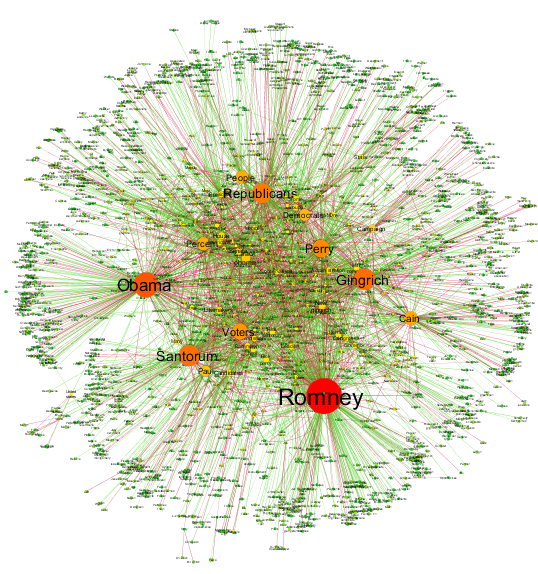
AI usage in social network analysis and high-tech surveillance capabilities for managing social networks and their human nodes.
The Intersection of Artificial Intelligence, Social Network Analysis, and High-Tech Surveillance: A Technical Analysis
- Introduction
The advent of artificial intelligence (AI) has revolutionized our ability to analyze and manage complex social networks. This technological leap, combined with advanced surveillance capabilities, has created powerful tools for understanding and influencing human behavior at unprecedented scales. This essay explores the technical aspects of AI applications in social network analysis (SNA) and the surveillance technologies used to manage these networks and their human components.
- Fundamentals of Social Network Analysis
2.1 Graph Theory and Network Structures
Social Network Analysis is rooted in graph theory, where individuals (nodes) and their relationships (edges) form complex structures. AI enhances our ability to analyze these structures by:
- Identifying key network properties (e.g., centrality, density, clustering coefficient)
- Detecting communities and subgroups within larger networks
- Analyzing network dynamics and evolution over time
2.2 Data Collection and Preprocessing
AI-driven data collection methods include:
- Web scraping and API integration for social media platforms
- Natural Language Processing (NLP) for text data extraction
- Computer vision for image and video analysis
Preprocessing techniques leverage machine learning for:
- Data cleaning and normalization
- Feature extraction and selection
- Dimensionality reduction
- AI Techniques in Social Network Analysis
3.1 Machine Learning Algorithms
Various machine learning algorithms are employed in SNA:
- Supervised Learning: Classification and regression for predicting network properties
- Unsupervised Learning: Clustering for community detection
- Semi-supervised Learning: Leveraging both labeled and unlabeled data for improved accuracy
3.2 Deep Learning Architectures
Deep learning models have shown remarkable performance in SNA tasks:
- Graph Neural Networks (GNNs): Specialized architectures for graph-structured data
- Convolutional Neural Networks (CNNs): Adapted for graph convolutions
- Recurrent Neural Networks (RNNs): For temporal network analysis
3.3 Natural Language Processing
NLP techniques are crucial for analyzing textual content in social networks:
- Sentiment Analysis: Gauging public opinion and emotional states
- Topic Modeling: Identifying prevalent themes and discussions
- Named Entity Recognition: Extracting key actors and organizations
3.4 Computer Vision
AI-powered computer vision analyzes visual content shared on social networks:
- Image Classification: Categorizing shared images
- Object Detection: Identifying specific elements within images
- Facial Recognition: Identifying individuals (subject to ethical and legal considerations)
- High-Tech Surveillance Capabilities
4.1 Data Collection Technologies
Advanced surveillance systems employ various data collection methods:
- Social Media Monitoring: Real-time tracking of public posts and interactions
- Internet Traffic Analysis: Deep packet inspection and metadata analysis
- IoT Device Integration: Leveraging connected devices for data collection
4.2 Biometric Technologies
Biometric data adds another dimension to surveillance capabilities:
- Facial Recognition: Identifying individuals in images and video
- Voice Recognition: Analyzing audio data for speaker identification
- Gait Analysis: Identifying individuals based on movement patterns
4.3 Location Tracking
Geospatial data provides crucial context for social network analysis:
- GPS Data: From mobile devices and applications
- Cell Tower Triangulation: Approximate location based on cellular network data
- Wi-Fi Positioning: Leveraging public and private Wi-Fi networks
4.4 Behavioral Analytics
AI-driven behavioral analytics focus on understanding and predicting human actions:
- Pattern Recognition: Identifying regular behaviors and anomalies
- Predictive Modeling: Forecasting future actions based on historical data
- Influence Mapping: Tracing the spread of ideas and behaviors through networks
- AI Applications in Managing Social Networks
5.1 Influence Detection and Amplification
AI algorithms can identify influential nodes within a network:
- Centrality Measures: Betweenness, eigenvector, and PageRank centrality
- Influence Maximization: Optimizing information spread through key nodes
- Bot Detection: Identifying and analyzing automated accounts
5.2 Community Detection and Management
AI enhances our ability to identify and manage sub-communities:
- Modularity-based Algorithms: Detecting densely connected groups
- Dynamic Community Tracking: Analyzing community evolution over time
- Cross-platform Community Mapping: Linking communities across different social networks
5.3 Information Flow Analysis
Understanding how information propagates through networks is crucial:
- Cascade Models: Predicting the spread of information
- Rumor Detection: Identifying and tracking misinformation
- Trend Prediction: Forecasting emerging topics and viral content
5.4 Anomaly Detection and Security
AI-powered anomaly detection helps maintain network integrity:
- Fraud Detection: Identifying suspicious activities and transactions
- Cyber Threat Intelligence: Detecting and preventing network-based attacks
- Privacy Violation Detection: Monitoring for potential breaches of user privacy
- Ethical Considerations and Challenges
6.1 Privacy Concerns
The extensive data collection and analysis raise significant privacy issues:
- Data Ownership: Determining who owns and controls personal data
- Consent Mechanisms: Ensuring users understand and agree to data usage
- Data Anonymization: Techniques for protecting individual identities
6.2 Bias and Fairness
AI systems can perpetuate or amplify existing biases:
- Dataset Bias: Ensuring representative and diverse training data
- Algorithm Fairness: Developing and implementing fair AI models
- Transparency and Explainability: Making AI decision-making processes interpretable
6.3 Surveillance Ethics
The power of AI-driven surveillance raises ethical questions:
- Proportionality: Balancing security needs with individual rights
- Accountability: Ensuring oversight and responsible use of surveillance technologies
- Chilling Effects: Considering the impact on free speech and association
6.4 Dual-Use Concerns
Many AI technologies have both beneficial and potentially harmful applications:
- Misuse Prevention: Developing safeguards against malicious use
- International Cooperation: Establishing global norms and regulations
- Ethical AI Development: Incorporating ethical considerations into the AI development process
- Future Trends and Developments
7.1 Federated Learning
Decentralized AI training could address some privacy concerns:
- Local Model Training: Keeping personal data on user devices
- Model Aggregation: Combining insights without sharing raw data
- Differential Privacy: Adding noise to protect individual privacy
7.2 Quantum Computing
Quantum algorithms could revolutionize network analysis:
- Accelerated Graph Analysis: Solving complex network problems more efficiently
- Quantum Machine Learning: Developing novel AI algorithms leveraging quantum properties
- Enhanced Cryptography: Improving data security and privacy protections
7.3 Neurosymbolic AI
Combining neural networks with symbolic reasoning:
- Improved Interpretability: Making AI decision-making more transparent
- Knowledge Integration: Incorporating domain expertise into AI models
- Causal Reasoning: Enhancing AI’s ability to understand cause-and-effect relationships
7.4 Edge AI
Bringing AI capabilities closer to data sources:
- Reduced Latency: Enabling real-time analysis and decision-making
- Enhanced Privacy: Processing sensitive data locally
- Distributed Intelligence: Creating more resilient and adaptive AI systems
- Conclusion
The integration of AI, social network analysis, and high-tech surveillance presents unprecedented opportunities for understanding and managing human social structures. These technologies offer powerful tools for enhancing security, improving social services, and driving innovation. However, they also pose significant ethical challenges that must be carefully addressed.
As we continue to develop and deploy these technologies, it is crucial to maintain a balance between their potential benefits and the protection of individual rights and societal values. Ongoing research, ethical guidelines, and regulatory frameworks will be essential in shaping the responsible use of AI in social network analysis and surveillance.
The future of this field will likely see further integration of AI into our social fabric, with more sophisticated algorithms and data collection methods. As these technologies evolve, so too must our approaches to privacy, security, and ethical AI deployment. By fostering interdisciplinary collaboration and maintaining a focus on human-centered AI development, we can work towards harnessing the full potential of these technologies while mitigating their risks.
Managing social networks by manipulating influencer nodes is a complex and ethically sensitive topic. Here’s a technical overview of how this could potentially be done, focusing on the analytical and technological aspects:
- Identifying Influencer Nodes
The first step is accurately identifying influential nodes within the network. This can be done through:
- Centrality Measures: Using algorithms like PageRank, eigenvector centrality, or betweenness centrality to quantify node importance.
- Influence Maximization Algorithms: Employing models like Independent Cascade or Linear Threshold to determine nodes with maximum influence spread.
- Machine Learning Models: Training classifiers to predict influential users based on various features (e.g. engagement rates, follower counts, content virality).
- Network Topology Analysis
Understanding the network structure is crucial:
- Community Detection: Identifying tightly-knit groups within the larger network.
- Bridging Nodes: Locating nodes that connect different communities.
- Structural Hole Theory: Identifying nodes that bridge gaps in the network.
- Behavioral Profiling
Creating detailed profiles of influencer nodes:
- Content Analysis: Using NLP to analyze the topics, sentiment, and style of their posts.
- Temporal Patterns: Examining posting frequency and timing.
- Interaction Analysis: Studying how they engage with followers and other influencers.
- Targeted Intervention Strategies
Once influencers are identified and profiled, various strategies could potentially be employed:
- Information Seeding: Strategically introducing information through selected influencers.
- Nudge Techniques: Subtly encouraging certain behaviors or content sharing.
- Incentive Structures: Developing reward systems to encourage specific actions.
- Adaptive Algorithms
Implementing AI systems that can adapt strategies in real-time:
- Reinforcement Learning: Developing agents that learn optimal intervention strategies over time.
- Multi-Armed Bandit Algorithms: Balancing exploration and exploitation in influencer selection.
- Dynamic Network Models: Adjusting strategies based on evolving network structures.
- Cross-Platform Coordination
Leveraging influencers across multiple social platforms:
- Identity Resolution: Linking user profiles across different networks.
- Cross-Platform Influence Models: Understanding how influence on one platform translates to others.
- Coordinated Campaign Management: Synchronizing messaging and timing across platforms.
- Feedback Loops and Measurement
Continuously monitoring and adjusting strategies:
- Real-time Analytics: Tracking the spread and impact of information.
- Sentiment Analysis: Gauging public reaction to influenced content.
- Network Evolution Tracking: Monitoring how interventions affect overall network structure.
- Countermeasure Consideration
Accounting for potential resistance or counter-influence attempts:
- Bot Detection: Identifying and filtering out automated influence attempts.
- Adversarial Influence Models: Simulating and preparing for opposing influence campaigns.
- Resilience Testing: Assessing the robustness of influence strategies under various conditions.
It’s crucial to note that while these techniques are technically possible, their use raises significant ethical concerns regarding manipulation, privacy, and consent. Any application of these methods should be carefully considered in light of legal and ethical frameworks, with a focus on transparency and user protection.
 Defence and Strategic Mind