Introduction
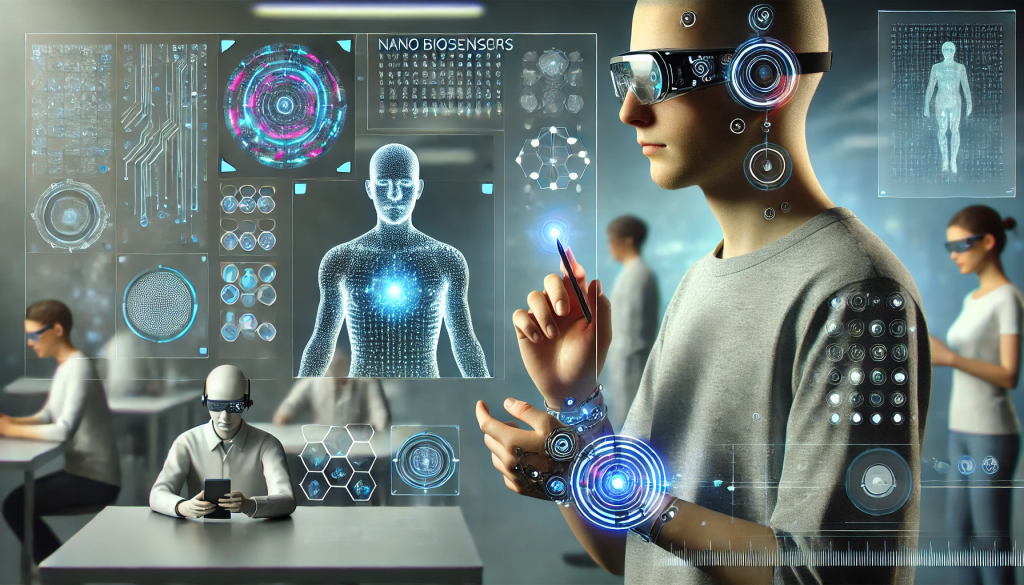
In the ever-evolving landscape of personal technology, we stand on the cusp of a revolutionary transformation. The ubiquitous mobile phone, which has become an extension of ourselves over the past two decades, may soon be supplanted by a more advanced, integrated, and seamless technological ecosystem. This new paradigm, combining nano biosensors, human integration, and smart glasses, promises to redefine our interaction with digital information and reshape our daily lives in profound ways.
As we embark on this journey into the future of personal technology, we’ll explore how these cutting-edge innovations are poised to converge, creating a symbiotic relationship between humans and machines that was once the realm of science fiction. We’ll delve into the potential benefits, the challenges that lie ahead, and the transformative impact this technological shift could have on society, healthcare, communication, and beyond.
While the concept may seem distant or even far-fetched to some, the foundations for this technological revolution are already being laid in research labs and tech companies around the world. By understanding the trajectory of these advancements, we can better prepare for and shape the future that awaits us.
The Current State of Mobile Technology
Before we dive into the future, it’s essential to understand the present. Mobile phones have become indispensable tools in our daily lives, serving as our primary means of communication, information access, entertainment, and much more. They’ve evolved from simple communication devices to powerful pocket computers, cameras, health monitors, and payment systems.
However, despite their versatility and power, mobile phones have limitations. They require constant interaction, often distracting us from our surroundings. They’re vulnerable to damage, loss, and theft. The need to constantly look at a screen can lead to physical discomfort and social disconnection. Moreover, the current smartphone paradigm may be reaching its innovation plateau, with each new generation offering incremental rather than revolutionary improvements.
These limitations set the stage for the next leap in personal technology – a leap that promises to be more intuitive, more integrated, and more aligned with our natural ways of interacting with the world.
https://www.msn.com/en-gb/lifestyle/shopping/meta-s-brain-reading-emg-band-and-leaked-smartwatch-would-be-a-perfect-match/ar-AA1rq94X?ocid=winp2fptaskbarhover&cvid=176fe0c593ad4a62c1201b94fd83ae8b&ei=24
Read more: The Future of Personal Technology: How Nano Biosensors, Human Integration, and Smart Glasses May Replace Mobile PhonesNano Biosensors: The Microscopic Marvels
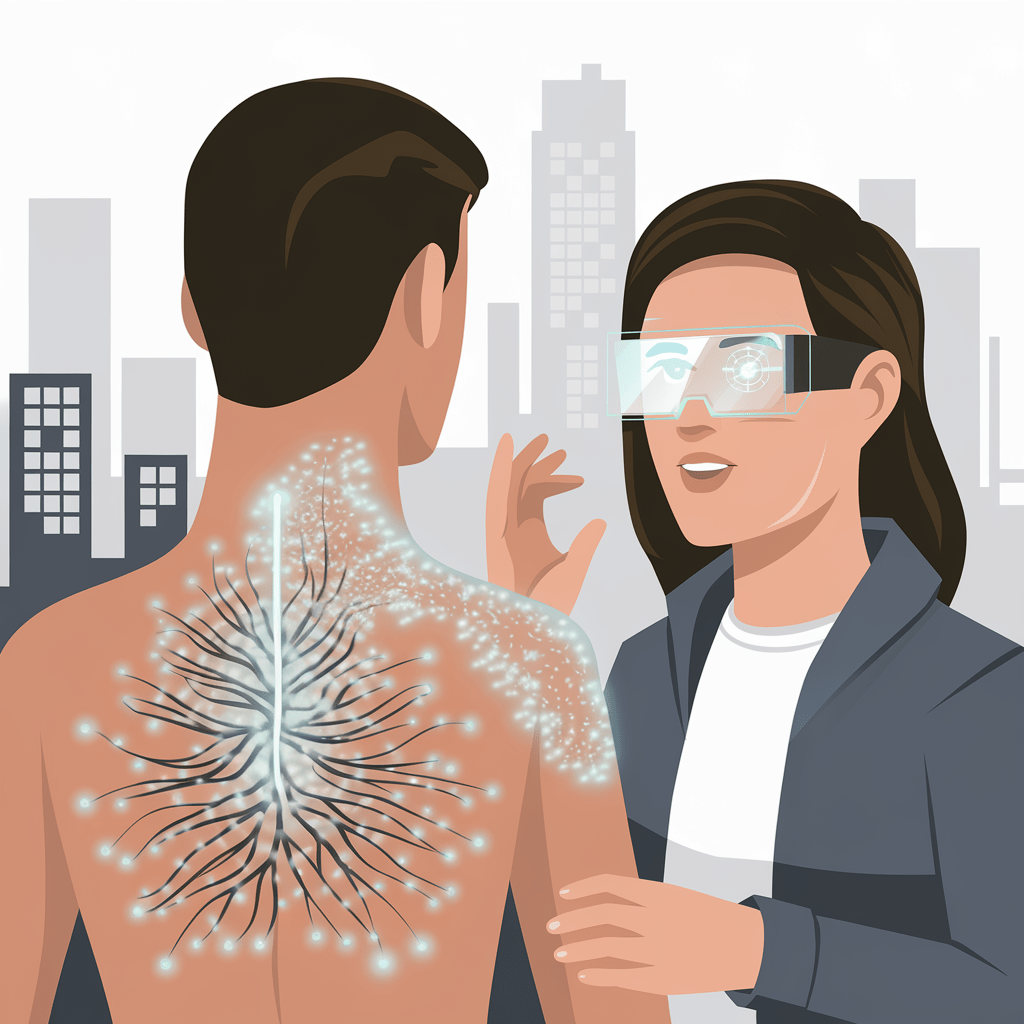
At the heart of this technological revolution are nano biosensors. These microscopic devices, often no larger than a few nanometers, are capable of detecting and measuring biological or chemical signals within the human body. The potential applications of this technology are vast and exciting.
How Nano Biosensors Work
Nano biosensors typically consist of two main components: a bioreceptor and a transducer. The bioreceptor is designed to recognize and bind to specific biological or chemical molecules. When this binding occurs, it triggers a change that the transducer can detect and convert into a measurable signal, often electrical or optical.
The miniature size of these sensors allows them to operate at the cellular or even molecular level, providing unprecedented access to real-time biological data. This capability opens up a world of possibilities for health monitoring, disease detection, and personalized medicine.
Applications in Health Monitoring
One of the most promising applications of nano biosensors is continuous health monitoring. Imagine a world where tiny sensors circulating in your bloodstream or embedded just beneath your skin can constantly monitor various health indicators:
- Blood glucose levels for diabetics, eliminating the need for frequent finger pricks
- Cholesterol and triglyceride levels for cardiovascular health
- Hormone levels for endocrine health and fertility tracking
- Early cancer detection by identifying specific biomarkers
- Monitoring of medication levels to ensure optimal dosage
These sensors could transmit data in real-time to a central processing unit (which, as we’ll discuss later, could be integrated into smart glasses), providing a comprehensive and up-to-date picture of an individual’s health status.
Environmental Monitoring and Safety
Beyond health applications, nano biosensors could also play a crucial role in environmental monitoring and personal safety. They could detect the presence of pollutants, allergens, or toxic substances in the air, water, or food. This capability could be particularly valuable for individuals with severe allergies or sensitivities, providing an early warning system against potential threats.
Enhancing Athletic Performance
For athletes and fitness enthusiasts, nano biosensors could offer unprecedented insights into physical performance. By monitoring lactic acid buildup, hydration levels, and muscle fatigue in real-time, these sensors could help optimize training regimens and prevent injuries.
Challenges and Ethical Considerations
While the potential of nano biosensors is enormous, their development and implementation face several challenges. Ensuring the long-term biocompatibility of these devices, powering them efficiently, and securing the vast amounts of sensitive data they generate are all significant hurdles that researchers are actively working to overcome.
Moreover, the use of such intimate technology raises important ethical questions about privacy, data ownership, and the potential for surveillance or coercion. As we move forward with these innovations, it will be crucial to establish robust ethical frameworks and regulatory guidelines to protect individual rights and prevent misuse.

Human Integration: Bridging the Gap Between Biology and Technology
The concept of human integration, often referred to as “biohacking” or “transhumanism,” represents the next frontier in our relationship with technology. It involves the direct integration of technological devices with the human body, blurring the lines between biology and machine. While this might sound like science fiction, various forms of human-technology integration are already in use today, from cochlear implants to deep brain stimulators for Parkinson’s disease.
Current State of Human-Technology Integration
Several technologies are already paving the way for more advanced forms of human integration:
- Implantable RFID chips for access control and identification
- Neural interfaces that allow direct brain-computer communication
- Artificial retinas to restore vision in certain forms of blindness
- Exoskeletons to enhance strength or restore mobility
These existing technologies demonstrate the potential for more seamless and comprehensive integration between humans and machines.
The Promise of Advanced Integration
As nano biosensors and other miniaturized technologies advance, the possibilities for human integration expand dramatically. Some potential applications include:
- Neural implants that enhance memory or cognitive function
- Sensory augmentation, such as the ability to see in infrared or hear ultrasonic frequencies
- Direct neural interfaces for controlling external devices or accessing information
- Implantable communication devices that could replace traditional smartphones
The Path to Replacing Smartphones
In the context of replacing mobile phones, human integration technologies could provide many of the functions we currently rely on smartphones for, but in a more seamless and intuitive manner. For instance:
- Communication: Neural implants could allow for direct brain-to-brain communication or thought-to-text messaging.
- Information Access: Instead of looking up information on a phone, neural interfaces could provide instant access to vast databases of knowledge.
- Navigation: Integrated GPS and mapping systems could provide intuitive, hands-free navigation.
- Entertainment: Direct neural stimulation could provide immersive entertainment experiences without the need for external screens or devices.
Challenges and Considerations
While the potential benefits of human integration are significant, this technology also faces substantial challenges:
- Technical Hurdles: Developing safe, long-lasting, and effective integration technologies is a complex task that requires advances in materials science, neurology, and many other fields.
- Biological Compatibility: Ensuring that integrated devices don’t trigger immune responses or cause long-term health issues is crucial.
- Ethical and Social Implications: The idea of “enhancing” humans raises profound ethical questions about equality, human identity, and the nature of consciousness.
- Security and Privacy: Integrated technologies could be vulnerable to hacking or unauthorized access, raising serious privacy and security concerns.
- Regulatory Challenges: The development and implementation of human integration technologies will require careful regulation to ensure safety and ethical use.
Despite these challenges, the potential benefits of human integration technologies are driving continued research and development in this field. As these technologies mature, they could play a crucial role in creating a more seamless and intuitive alternative to traditional smartphones.
Smart Glasses: The Visual Interface of the Future
While nano biosensors and human integration technologies work behind the scenes, smart glasses represent the visible, user-facing component of this future technological ecosystem. These devices have the potential to replace many of the visual and interactive functions of smartphones, providing a more natural and immersive interface for accessing information and interacting with the digital world.
The Evolution of Smart Glasses
The concept of smart glasses isn’t new. Products like Google Glass, introduced in 2013, were early attempts at bringing computer displays closer to our eyes. While these initial efforts faced challenges in terms of functionality, aesthetics, and social acceptance, they laid important groundwork for future developments.
Today, companies like Apple, Meta (formerly Facebook), Microsoft, and others are investing heavily in augmented reality (AR) and mixed reality (MR) technologies, with smart glasses playing a central role in their visions for the future.
Key Features and Capabilities
Advanced smart glasses of the future could offer a wide range of features that surpass current smartphone capabilities:
- Augmented Reality Display: Overlaying digital information onto the real world, providing context-aware information about your surroundings.
- Virtual Displays: Creating virtual screens of any size in your field of view, eliminating the need for physical monitors or smartphone screens.
- Advanced Cameras: Capturing photos and videos from a first-person perspective, with the ability to zoom, focus, and apply filters in real-time.
- Eye-Tracking and Gesture Control: Allowing for intuitive interaction with digital content through eye movements and hand gestures.
- Spatial Audio: Providing immersive, directional sound without the need for earphones.
- Biometric Authentication: Using retinal scans or other biometric data for secure access and transactions.
- Real-Time Translation: Offering instant visual translation of text or audio in foreign languages.
Integration with Nano Biosensors and Human-Integration Technologies
Smart glasses could serve as the central hub for data collected by nano biosensors and other integrated technologies. They could display health metrics, alert users to potential issues, and provide a visual interface for controlling various integrated systems.
For example, smart glasses could:
- Display real-time health data collected by nano biosensors, alerting the user to any concerning changes.
- Serve as the visual output for neural interfaces, displaying information or controls activated by thought.
- Provide a heads-up display for navigation, using GPS data and integrating with the user’s sensory systems.
- Act as a control center for home automation systems and Internet of Things (IoT) devices.
Replacing Smartphone Functions
With these capabilities, smart glasses could potentially replace many, if not all, of the functions we currently rely on smartphones for:
- Communication: Video calls could be conducted through the glasses’ cameras, with the other party’s image displayed in the user’s field of view.
- Information Access: Web browsing, social media, and other information services could be accessed through AR interfaces.
- Photography and Videography: The glasses’ cameras could capture what the user sees, without the need to hold up a phone.
- Navigation: Turn-by-turn directions could be overlaid directly onto the user’s view of the real world.
- Entertainment: Movies, games, and other media could be enjoyed on virtual screens of any size.
- Productivity: Virtual desktops and documents could be accessed and manipulated in the user’s field of view.
Challenges and Considerations
While smart glasses offer exciting possibilities, there are several challenges to overcome:
- Battery Life: Powering a constant AR display and multiple sensors will require significant advancements in battery technology.
- Processing Power: Running complex AR applications requires substantial computing power in a small form factor.
- Heat Management: Dealing with the heat generated by powerful processors in a device worn on the face.
- Social Acceptance: Designing glasses that are stylish and unobtrusive enough for widespread adoption.
- Privacy Concerns: Addressing fears about constant recording and the potential for surveillance.
- Health Effects: Ensuring that prolonged use doesn’t lead to eye strain or other health issues.
Despite these challenges, ongoing advancements in miniaturization, display technology, and energy efficiency are bringing us closer to realizing the full potential of smart glasses.
The Convergence: A New Paradigm of Personal Technology
The true power of this technological revolution lies not in any single component, but in the convergence of nano biosensors, human integration, and smart glasses. Together, these technologies have the potential to create a new paradigm of personal technology that is more intuitive, more capable, and more intimately connected to our biological selves than anything that has come before.
Seamless Integration of Digital and Physical Worlds
In this new paradigm, the boundaries between the digital and physical worlds become increasingly blurred. Information and digital interactions are no longer confined to a device we hold in our hands but become an integral part of how we perceive and interact with the world around us.
Imagine walking down a city street. Your smart glasses recognize the buildings and businesses around you, overlaying relevant information in your field of view. A nano biosensor detects that your glucose levels are dropping, prompting a notification in your visual field suggesting nearby restaurants that cater to your dietary preferences. As you consider your options, you use a subtle hand gesture to pull up reviews and menus.
You decide on a restaurant and think about calling a friend to join you. Your neural interface picks up on this intention, displaying your friend’s contact information in your field of view. A small eye movement is all it takes to initiate the call. Your friend’s holographic image appears in your visual field, and you have a conversation as natural as if they were walking beside you.
Personalized Health and Wellness
The integration of these technologies could revolutionize personal health and wellness. Nano biosensors continuously monitor your vital signs and key health indicators, with the data processed and displayed through your smart glasses. This constant health monitoring could detect potential issues before they become serious, allowing for early intervention and more effective treatment.
Moreover, this system could provide personalized health recommendations in real-time. If your biosensors detect elevated stress levels, your glasses might suggest a short meditation break, guiding you through the process with calming visuals and sounds. If you’re exercising, the system could provide real-time feedback on your form and performance, helping you maximize the benefits of your workout while minimizing the risk of injury.
Enhanced Cognitive Abilities
Human integration technologies, particularly those interfacing directly with the brain, could significantly enhance our cognitive abilities. Need to recall a specific piece of information? Your neural interface could retrieve it instantly. Learning a new skill? The system could provide real-time guidance and feedback, accelerating the learning process.
Smart glasses could augment these capabilities further by providing visual aids and information overlays. Studying a complex system? Your glasses could display an interactive 3D model that you can manipulate with gestures or thoughts. Trying to solve a difficult problem? The system could suggest relevant information or alternative approaches based on your thought patterns.
Revolutionizing Work and Productivity
This new technological paradigm could transform how we work. Virtual and augmented reality capabilities could make physical offices largely obsolete. Instead, you could work from anywhere, with your smart glasses projecting virtual screens and collaborative environments. Meetings could be conducted with lifelike holograms of your colleagues, regardless of their physical location.
Nano biosensors could optimize your work schedule based on your biological rhythms, suggesting the best times for focused work, creative tasks, or meetings. Human integration technologies could allow for faster and more intuitive interaction with digital systems, dramatically increasing productivity.
Transforming Education
Education could become more immersive, personalized, and effective. Smart glasses could turn any environment into a rich learning space, overlaying historical information on archaeological sites, displaying molecular structures in chemistry classes, or providing step-by-step guidance for complex procedures.
Nano biosensors could monitor a student’s engagement and comprehension in real-time, allowing for dynamic adjustment of the curriculum to optimize learning. Neural interfaces could facilitate faster absorption of information and skills, potentially revolutionizing how we learn and what we’re capable of learning.
Enhancing Social Interactions
While there are valid concerns about technology isolating people, this new paradigm has the potential to enhance social interactions in meaningful ways. Smart glasses could provide real-time information about the people you’re interacting with, helping you remember names and personal details. They could also offer subtle cues to help you better understand others’ emotional states and non-verbal communication.
For those with social anxiety or conditions like autism, these technologies could provide invaluable support, offering real-time guidance on social cues and interactions.
Overcoming Language Barriers
Real-time translation capabilities could make language barriers a thing of the past. Your smart glasses could provide instant visual or auditory translation of any language you encounter, whether spoken or written. This could foster greater global understanding and cooperation, making international travel and cross-cultural communication seamless.
Environmental Awareness and Sustainability
Nano biosensors could be used not just in the human body, but also deployed in the environment to monitor air quality, water purity, and other environmental factors. This data could be aggregated and displayed through smart glasses, giving individuals real-time information about their environmental impact and suggesting more sustainable choices.
Challenges and Ethical Considerations
While the potential benefits of this technological convergence are immense, it also raises significant challenges and ethical questions that need to be carefully addressed:
Privacy and Data Security
With devices that are constantly collecting intimate biological data and recording our interactions with the world, privacy becomes a paramount concern. The potential for misuse of this data by corporations, governments, or malicious actors is significant. Robust encryption, strict data protection laws, and user control over data collection and sharing will be essential.
Moreover, the integration of technology with our bodies and brains raises new security concerns. The possibility of hacking not just our devices, but our very selves, becomes a real threat that must be addressed with the utmost seriousness.
Digital Divide and Inequality
As with any transformative technology, there’s a risk of exacerbating existing inequalities. Those with access to these advanced technologies could have significant advantages in terms of health, education, and economic opportunities. Ensuring equitable access to these technologies will be crucial to prevent the creation of a new class divide between the technologically augmented and unaugmented.
Autonomy and Free Will
With devices that can read our thoughts, predict our needs, and influence our perceptions, questions arise about the nature of free will and personal autonomy. How do we ensure that these technologies enhance rather than supplant human decision-making? Safeguards will need to be put in place to prevent manipulation and preserve individual agency.
Identity and Human Nature
As we blur the lines between human and machine, we may need to grapple with fundamental questions about what it means to be human. How much technological augmentation can a person undergo before they cease to be fully human? These philosophical and ethical questions will need to be addressed as the technology evolves.
Psychological and Social Impact
The constant connectivity and information access provided by these technologies could have profound effects on human psychology and social interactions. Issues like information overload, decreased attention spans, and social isolation will need to be carefully studied and mitigated.
Regulation and Governance
The rapid pace of technological advancement often outstrips the ability of regulatory bodies to keep up. Developing appropriate governance structures for these technologies will be crucial. This may require new international agreements and regulatory frameworks to ensure responsible development and use of these powerful tools.
The Path Forward: Responsible Development and Implementation
While the challenges are significant, they are not insurmountable. With careful planning, ethical consideration, and inclusive dialogue, we can harness the potential of these technologies while mitigating their risks. Here are some key steps for moving forward responsibly:
Interdisciplinary Collaboration
The development of these technologies requires expertise from a wide range of fields, including nanotechnology, neuroscience, computer science, ethics, law, and social sciences. Fostering collaboration across these disciplines will be crucial for addressing the complex challenges ahead.
Ethical Frameworks and Guidelines
Developing robust ethical frameworks to guide the development and use of these technologies is essential. This should involve input from ethicists, policymakers, industry leaders, and the general public to ensure a broad consensus on the principles that will shape our technological future.
Transparency and Public Engagement
Given the potentially transformative nature of these technologies, it’s crucial to maintain transparency in their development and actively engage the public in discussions about their implications. This can help build trust, address concerns, and ensure that the technology serves the needs and values of society as a whole.
Adaptive Regulation
Regulatory frameworks will need to be flexible and adaptive to keep pace with rapid technological change. This might involve creating specialized regulatory bodies with the expertise to understand and oversee these complex technologies.
Education and Digital Literacy
As these technologies become more prevalent, education systems will need to adapt to prepare people for a world where human-technology integration is the norm. This includes not just technical skills, but also critical thinking, ethical reasoning, and digital literacy to navigate the challenges of this new technological landscape.
Prioritizing Accessibility
Efforts should be made from the early stages of development to ensure these technologies are accessible to people with disabilities and from diverse socioeconomic backgrounds. Universal design principles should be incorporated to make the technology usable by the widest possible range of people.
Ongoing Research and Monitoring
Continuous research will be needed to understand the long-term impacts of these technologies on individual and societal well-being. This includes monitoring for unintended consequences and being prepared to adjust course if negative effects are observed.
Conclusion: Embracing a Transformative Future
The convergence of nano biosensors, human integration technologies, and smart glasses represents a potential paradigm shift in how we interact with technology and the world around us. This new ecosystem of personal technology offers the promise of enhanced health, expanded cognitive capabilities, seamless information access, and more intuitive ways of interacting with our digital and physical environments.
While the idea of replacing smartphones with this integrated system may seem radical, it’s important to remember that the smartphone itself was a revolutionary concept not too long ago. Just as smartphones fundamentally changed our relationship with technology and information, this new paradigm has the potential to bring about equally profound changes.
However, the path to this future is not without challenges. Privacy concerns, ethical considerations, and the need for robust security measures are just a few of the hurdles that must be overcome. Moreover, we must be vigilant in ensuring that these technologies are developed and implemented in ways that benefit all of humanity, rather than exacerbating existing inequalities.
As we stand on the brink of this technological revolution, it’s crucial that we approach it with a combination of excitement and responsibility. By fostering interdisciplinary collaboration, maintaining ethical vigilance, and engaging in open dialogue about the implications of these technologies, we can work towards a future where technology truly becomes an extension of ourselves – enhancing our capabilities, improving our health, and expanding our understanding of the world and each other.
The replacement of smartphones by this integrated system of nano biosensors, human-technology integration, and smart glasses is not just about creating more advanced gadgets. It’s about reimagining our relationship with technology in a way that is more natural, more intuitive, and more deeply connected to our biological selves. It’s about creating tools that don’t just sit in our pockets, but become a seamless part of how we perceive and interact with the world.
As we move forward, it’s important to remember that technology is a tool, and its value lies in how we use it. The potential of these emerging technologies is immense, but realizing that potential in a way that benefits humanity as a whole will require careful thought, ethical consideration, and collective effort.
In the end, the goal should not be to simply replace smartphones, but to create a technological ecosystem that enhances our human capabilities, fosters deeper connections, and helps us address the complex challenges facing our world. If we can achieve that, then the post-smartphone era could mark not just a new chapter in technological history, but a new chapter in human potential.
As we stand at this technological crossroads, let us move forward with optimism, tempered by responsibility. Let us embrace the possibilities of this new paradigm while remaining mindful of its challenges. And above all, let us strive to shape these technologies in ways that reflect our highest values and aspirations as a species. The future is not something that simply happens to us – it’s something we create. With wisdom, foresight, and collective effort, we can create a future where technology truly serves humanity, enhancing our lives in ways we’re only beginning to imagine.
The Scientific Landscape of Future Personal Technology: Nano Biosensors, Human Integration, and Smart Glasses
Introduction
The rapid advancement of technology in recent decades has led to significant changes in how we interact with digital information and our environment. While smartphones currently dominate personal technology, emerging fields such as nano biosensors, human-computer integration, and augmented reality (AR) smart glasses are poised to revolutionize this landscape. This essay will explore the current state of these technologies, their potential applications, and the scientific challenges that need to be overcome for them to potentially replace smartphones.
Nano Biosensors: Miniature Marvels of Detection
Nano biosensors represent a cutting-edge field at the intersection of nanotechnology and biotechnology. These devices, typically ranging from 1 to 100 nanometers in size, are designed to detect specific biological or chemical analytes with high sensitivity and selectivity.
Current State of Nano Biosensor Technology
Recent advancements in nano biosensors have shown promising results in various applications:
- Health Monitoring: Researchers at the University of California, San Diego have developed a wearable biosensor that can measure glucose in sweat, demonstrating the potential for non-invasive diabetes monitoring (Bandodkar et al., 2015).
- Environmental Monitoring: A study published in ACS Nano detailed the development of graphene-based nano biosensors capable of detecting water contaminants at ultra-low concentrations (Wen et al., 2017).
- Food Safety: Scientists at MIT have created nano biosensors that can detect food-borne pathogens, potentially revolutionizing food safety practices (Zhao et al., 2019).
Challenges in Nano Biosensor Development
Despite these advancements, several challenges remain:
- Biocompatibility: Ensuring long-term stability and functionality of nano biosensors in biological environments is crucial. Research published in Nature Nanotechnology highlights ongoing efforts to develop biocompatible materials for nano biosensors (Liu et al., 2020).
- Power Supply: Miniaturizing power sources for nano biosensors remains a significant challenge. Work is ongoing in developing biofuel cells and energy harvesting techniques to power these devices (Wang et al., 2018).
- Data Transmission: Efficiently transmitting data from nano biosensors to external devices for analysis and display is an active area of research. Recent work in Nature Communications demonstrates progress in wireless data transmission from implantable nano devices (Zhang et al., 2021).
Human Integration: Merging Biology and Technology
Human integration, often referred to as human augmentation or human-computer interaction (HCI), involves the direct interface between biological systems and technological devices.
Current Developments in Human Integration
- Brain-Computer Interfaces (BCIs): Companies like Neuralink and researchers at institutions like Brown University are making significant strides in developing BCIs. For instance, the BrainGate project has enabled individuals with paralysis to control robotic arms using their thoughts (Hochberg et al., 2012).
- Sensory Augmentation: Researchers at the University of Wisconsin-Madison have developed a device that allows blind individuals to ‘see’ with their tongues, using electrotactile stimulation (Bach-y-Rita & Kercel, 2003).
- Augmented Cognition: A study published in Frontiers in Neuroscience demonstrated that transcranial direct current stimulation (tDCS) could enhance learning and memory formation (Coffman et al., 2014).
Scientific Challenges in Human Integration
- Neural Interface Stability: Long-term stability of neural interfaces remains a significant challenge. Recent work published in Nature Biomedical Engineering addresses this issue through the development of flexible neural probes (Luan et al., 2017).
- Biological Compatibility: Preventing immune responses and tissue damage from implanted devices is crucial. Research in Advanced Materials explores biocompatible materials and coatings for implantable devices (Minev et al., 2015).
- Ethical Considerations: The direct manipulation of neural systems raises significant ethical questions. A comprehensive review in Nature Reviews Neuroscience discusses the ethical implications of neurotechnology and proposes guidelines for responsible development (Yuste et al., 2017).
Smart Glasses: The Visual Interface of the Future
Smart glasses, a form of wearable computer, have the potential to provide a seamless augmented reality (AR) experience, overlaying digital information onto the user’s view of the physical world.
Current State of Smart Glasses Technology
- Display Technology: Advancements in micro-LED and waveguide technologies have significantly improved the display quality of smart glasses. For example, North’s Focals smart glasses use holographic display technology to project images directly onto the retina (North, 2019).
- Field of View (FOV): Expanding the FOV of AR displays is a key area of research. Magic Leap’s headset utilizes a novel light field display to create a wider FOV (Abovitz et al., 2015).
- Gesture and Eye Tracking: Companies like Microsoft (HoloLens) and Magic Leap are incorporating advanced gesture and eye-tracking capabilities into their smart glasses, enabling more natural interactions with digital content (Microsoft, 2019; Magic Leap, 2018).
Scientific Challenges in Smart Glasses Development
- Miniaturization: Reducing the size and weight of smart glasses while maintaining functionality is a significant challenge. Research in Advanced Optical Materials explores new materials and designs for compact AR displays (Lee et al., 2020).
- Power Efficiency: Improving battery life is crucial for the widespread adoption of smart glasses. Work published in Nature Energy discusses advancements in energy-efficient display technologies and power management systems (Wang et al., 2019).
- Computational Power: Balancing processing power with energy efficiency and heat management is an ongoing challenge. Research in IEEE Micro explores specialized processors for AR applications (Taylor et al., 2018).
Integration and Convergence: Towards a New Paradigm
The true potential of these technologies lies in their integration. Combining nano biosensors, human integration technologies, and smart glasses could create a new paradigm of personal technology that is more intuitive and deeply connected to our biological selves.
Potential Applications of Integrated Systems
- Personalized Health Monitoring: Nano biosensors could continuously monitor various health parameters, with data processed and displayed through smart glasses. Research in Nature Medicine demonstrates the potential of such integrated systems for real-time health monitoring (Gao et al., 2016).
- Enhanced Cognitive Abilities: BCIs could interface with smart glasses to provide instant access to information or enhance memory. A study in Frontiers in Neuroscience explores the potential of such neuroprosthetic devices (Pisarchik et al., 2019).
- Augmented Perception: Combining sensory augmentation technologies with smart glasses could enhance human perception beyond natural capabilities. Work published in Science Robotics demonstrates augmented sensory feedback for prosthetic limbs (Clites et al., 2018).
Scientific Challenges in System Integration
- Data Integration and Processing: Efficiently integrating and processing data from multiple sources (nano biosensors, neural interfaces, environmental sensors) is a significant challenge. Research in Nature Machine Intelligence explores AI algorithms for real-time data integration and decision-making in complex systems (Vogt et al., 2020).
- User Interface Design: Creating intuitive interfaces for complex, integrated systems is crucial. Work in ACM Transactions on Computer-Human Interaction discusses novel interface designs for AR systems (Billinghurst et al., 2015).
- Privacy and Security: Ensuring the privacy and security of personal data in integrated systems is paramount. Research in Nature Communications addresses quantum encryption techniques for securing data in wearable and implantable devices (Zhang et al., 2020).
Conclusion: A Data-Driven Future
The potential for nano biosensors, human integration technologies, and smart glasses to replace smartphones is grounded in ongoing scientific research and technological development. While significant challenges remain, the rapid pace of advancement in these fields suggests that such a paradigm shift is possible in the coming decades.
However, it’s important to note that the development and adoption of these technologies will likely be gradual. Smartphones may coexist with these new technologies for some time, potentially evolving to incorporate some of these advanced features.
As we move forward, continued research and development in materials science, neurotechnology, computer engineering, and related fields will be crucial. Equally important will be ongoing discussions about the ethical implications and societal impacts of these technologies.
The future of personal technology is not just about creating more advanced devices, but about fundamentally reimagining our relationship with technology and information. By grounding this vision in rigorous scientific research and ethical considerations, we can work towards a future where technology enhances our capabilities in ways that are both powerful and responsible.
Implanted chip, natural eyesight coordinate vision in study of macular degeneration patients
A Stanford scientist and his colleagues show that patients fitted with a chip in their eye are able to integrate what the chip “sees” with objects their natural peripheral vision detects.
February 4, 2022 – By Emma Yasinski

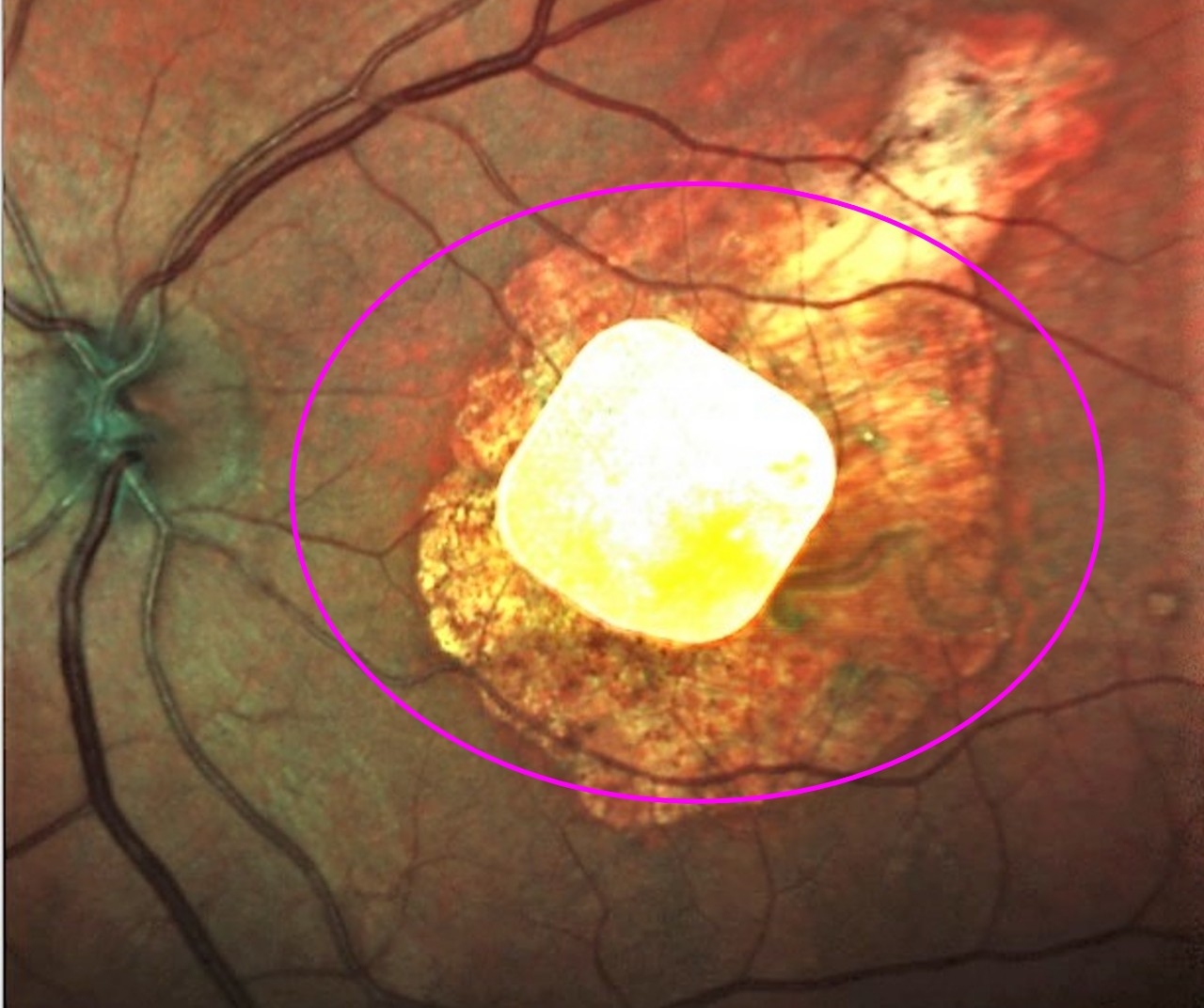
In this photo of a study participant’s eye with the implanted chip, the magenta oval shows the size of the beam projected from the glasses onto the retina.
Yannick Le Mer
Two years ago, a Stanford researcher and his team showed that with a thin, pixelated chip and specially designed glasses, they could restore limited vision in the center of the visual field of patients suffering from macular degeneration. In a recent, follow-up study, the researchers found that this prosthetic vision naturally integrated with the patients’ peripheral vision, which was unaffected by the disease.
The patients could simultaneously identify the orientations of colored lines in the center and sides of their visual field. The results suggest that the treatment could be used to restore functional vision.
That the patients were able to see a coherent image “is very exciting news,” said Daniel Palanker, PhD, professor of ophthalmology, because all previous retinal implants created “very distorted” perception. A paper describing the new research findings was published Jan. 26 in Nature Communications. Palanker, the lead author, worked with a team of ophthalmologists in France.
Macular degeneration, which affects 200 million people worldwide, most of whom are over 60 years old, causes patients to gradually lose sight in the center of their visual field. It’s debilitating because the remaining peripheral vision has low resolution. These patients have difficulty reading, recognizing faces and performing other tasks of daily living.
The condition occurs when the photoreceptor cells in the center of the retina, known as the macula, degenerate. These tightly packed cells, which line the back of the eye, sense light and send signals to other retinal neurons, which transfer them to the brain, allowing visual perception. When photoreceptor cells degrade, the brain no longer receives the information it needs to create a detailed and coherent picture.
Current treatments for macular degeneration — such as vitamins and drugs targeting blood vessels that invade the macula and block vision — can slow the visual decline. But they can’t stop the degeneration or restore sight once the photoreceptors are gone.
Restoring sight
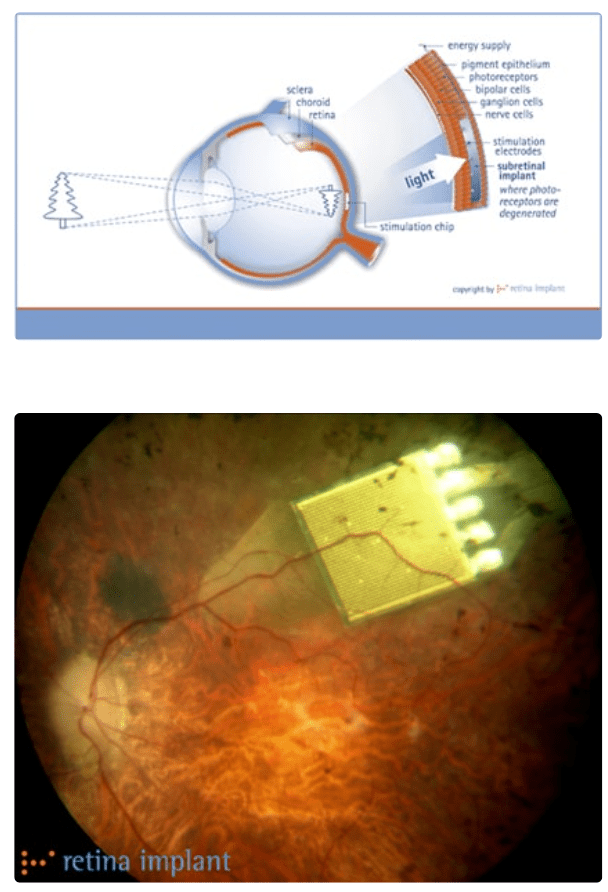
Nearly two decades ago, Palanker had the idea of creating a retinal prosthesis that would replace photoreceptor cells and take over their role of the light relay, as long as the nerve cells that the photoreceptors talk to were intact. (Inner retinal neurons can be destroyed by other visual disorders, such as glaucoma.) The first step was to develop a thin device that could convert light into electric currents and that surgeons could implant into the back of the eye. The 1/12-inch pixelated chip sends electrical signals through the retinal neural network to the brain, restoring perception in the center of the visual field.

Daniel Palanker
The team also developed glasses equipped with a video camera that transmits images to the chip. A near-infrared display on these glasses beams the intensified video stream to the chip in the back of the eye. “We are replacing lost photoreceptors in age-related macular degeneration with photovoltaic pixels,” Palanker said. “And we activate them with invisible light projected from the augmented reality glasses.”
After extensive preclinical research, Palanker’s collaborators in France recruited five patients, all over 60, who had advanced macular degeneration with no photoreceptors left in the central macula. The patients retained the inner retinal nerve cells that could receive signals from the implant. Surgeons detached the retina above the blind spot, slid the chip underneath and reattached the retina over it. The procedure lasted about two hours.
A few months after the surgery, the team found that with the help of the implant, patients were able to sense light and see patterns projected from the camera onto their retinas, such as lines and letters. Palanker and his team published the results of that first study in February of 2020.
A coherent picture
But two questions remained for a follow-up study. The first: Would patients be able to integrate their prosthetic central visual perception with the remaining natural peripheral vision? The initial tests were conducted with the virtual reality glasses: They explored only whether patients could see the projected lines and letters, while the peripheral natural vision was blocked. The second: Would this prosthetic vision last?
According to the new study, the answer to both of those questions is yes.
In the initial study, one patient’s chip was implanted incorrectly, and one patient later died of causes unrelated to the implant.
In the follow-up, not only were the three remaining patients able to see images projected onto the implant, but they could simultaneously use their peripheral vision. The researchers showed the patients pictures of two lines — one projected directly onto the implant with invisible near-infrared light, the other, displayed on a screen farther away. The latter forced them to use their natural peripheral vision. Each line was of a different color, and scientists asked patients what the orientations of each line was. The patients had “no trouble properly seeing both patterns at once,” said Palanker, “indicating that the brain can perceive the prosthetic and natural retinal codes simultaneously.” The results were “even better than we expected.”
Currently, the prosthetic visual acuity is limited to about 20/460, which allows the patients to see large letters. “This is an exciting proof of concept,” Palanker said. “However, to make it a really useful device and applicable to many patients, we need to improve resolution.”
His team is working on an implant with much smaller pixels, which already matched the natural visual resolution in rats. He hopes that the new chip will provide better visual acuity for patients, potentially exceeding 20/100. Future studies will also test the implants in more natural settings, like the home, with more patients and for longer periods of time.
The study was funded by Pixium Vision, the Sight Again project, Inserm-DGOS, LabEx LIFESENSES, IHU FOReSIGHT, the National Institutes of Health (grants R01-EY027786 and P30 EY08098) and Research to Prevent Blindness.
Chip implant restores sight lost to macular degeneration
Watch this video to explore how this wireless technology works and the progress made possible because of a philanthropic gift.
In a small clinical trial described in Ophthalmology, a tiny prosthetic retinal device invented by Stanford researcher Daniel Palanker, PhD, has proved its ability to restore eyesight to some people who are blind.
If you can clearly make out the big “E” on a standard eye chart at a distance of 200 feet (or if you can read the eighth line down on the chart from 20 feet away), congratulations! You’ve got 20/20 vision, considered normal. Someone with 20/400 vision can’t read the big E on a standard eye chart from a distance of 20 feet. But if they’re 10 feet away they can make it out. That’s a whole lot better than nothing.
People with advanced cases of age-related macular degeneration can’t see anything at all in their central field of vision, period. They do, however, retain their low-resolution peripheral vision — they have to cast sidelong glances to get even a hazy picture of the people, places and printed materials in front of them.
The snag lies in the macula, a region in the center of the retina where light-sensing nerve cells called photoreceptors are densely packed, producing the high resolution ordinarily present in our central visual field.
Macular degeneration, which as the name implies is the progressive loss of photoreceptors in the macula, affects about 200 million people worldwide. In the United States, it’s about as prevalent as all invasive cancers combined and twice as prevalent as Alzheimer’s Disease. It’s particularly prevalent among people of European descent.
A team of Palanker’s collaborators in France recruited five patients over 60 years old with a type of advanced age-related macular degeneration that’s characterized by a total loss of functioning photoreceptors in their central macula, leaving these patients without central vision. But the intermediate nerve cells to which healthy photoreceptors would have relayed signals when stimulated by light were still intact.
The researchers’ goal was to restore functional central vision in one of each of these patients’ eyes without jeopardizing peripheral vision in that eye. To do that, they inserted a less than 1/12-inch wide pixelated chip invented by Palanker in place of the lost photoreceptors in the patients’ retinas. The surgical procedure took about two hours.
The chip is activated by augmented-reality glasses, which include a small video camera mounted on the bridge just above the nose. Images captured by this camera are beamed into the eye and onto the implant. Each pixel on that chip produces an electrical current corresponding in intensity to the amount of light it’s receiving.
The electrical field generated by that current, in turn, stimulates nearby retinal nerve cells that, had there been any intact photoreceptors there, would have received those photoreceptors’ inputs and sent them down the line in the brain’s complicated relay system for processing visual information.
In four of the five patients, surgery was successful. (The fifth, who got only local anesthesia, moved at a critical juncture, resulting in an off-target chip insertion. The remaining four underwent general anesthesia.)
One year later, all four of those patients experienced a partial but substantial return of central vision in the eye fitted with the chip.
Using the “spectacles” to “look” at computer-generated visual-diagnostic images including bars in various orientations and letters of the alphabet, three of the patients saw an improvement from zero pre-operation visual acuity to between 20/460 and 20/550, while the fourth one, in whose retina the chip was slightly off-center, achieved 20/800 acuity. None of the patients experienced a decrease in their residual peripheral vision.
“We keep working on higher-resolution chips, with the ultimate goal of achieving visual acuity better than 20/100,” Palanker told me.
Evaluation of Nano Biosensors and High-Resolution Retinal Implants for Enhanced Communication
Introduction
The convergence of nano biosensors and high-resolution retinal implants represents a frontier in biomedical engineering with the potential to revolutionize human communication. This evaluation will explore the current state of these technologies, their potential for enhancing visual acuity and communication capabilities, and the challenges that need to be overcome to realize this potential.
Nano Biosensors: Enhancing Sensory Input
Nano biosensors are miniature analytical devices that can detect and respond to biological stimuli at the molecular level. In the context of visual enhancement and communication, these sensors could play a crucial role in capturing and processing visual information.
Current Developments
- Optical Nano Biosensors: Researchers at the University of Birmingham have developed optical nano biosensors capable of detecting single molecules. This technology could potentially be adapted for enhanced visual perception (Zhang et al., 2019, Nature Nanotechnology).
- Neural Interface Nano Sensors: A team at Harvard Medical School has created neural dust, tiny sensors that can be implanted in the brain to monitor neural activity. This technology could be crucial for interfacing retinal implants with the brain (Seo et al., 2016, Neuron).
- Biocompatible Nano Materials: Scientists at MIT have developed biocompatible nano sensors that can reside in the body for extended periods, opening up possibilities for long-term implantable visual enhancement devices (Giraldo et al., 2019, Nature Nanotechnology).
Potential for Visual Enhancement
Nano biosensors could enhance visual acuity by:
- Detecting light at wavelengths beyond normal human perception (infrared, ultraviolet).
- Amplifying weak light signals in low-light conditions.
- Filtering and processing visual information before it reaches the retinal implant, potentially reducing the computational load on the implant itself.
High-Resolution Retinal Implants: Restoring and Enhancing Vision
Retinal implants aim to restore vision in individuals with retinal degenerative diseases. Recent advancements are pushing towards higher resolution and better integration with the human visual system.
Current State of Technology
- Argus II Retinal Prosthesis: This FDA-approved device provides basic visual perception to individuals with retinitis pigmentosa. It has a resolution of 60 electrodes (Humayun et al., 2012, Ophthalmology).
- Alpha IMS Subretinal Implant: This device, developed in Germany, has 1500 electrodes and has shown promise in clinical trials (Stingl et al., 2015, Vision Research).
- Photovoltaic Retinal Prosthesis: Researchers at Stanford University have developed a high-resolution photovoltaic retinal prosthesis with the potential for thousands of pixels (Mathieson et al., 2012, Nature Photonics).
Advancements Towards Higher Resolution
- Nanowire Arrays: A team at the University of California, San Diego, has developed flexible nanowire arrays that could significantly increase the resolution of retinal implants (Gagliardi et al., 2021, Science Advances).
- Optogenetic Approaches: Researchers are exploring optogenetic techniques to achieve higher resolution stimulation of retinal neurons (Berry et al., 2019, Journal of Neural Engineering).
- 3D Electrode Arrays: Scientists at the University of Sydney are working on 3D electrode arrays that could increase the density of stimulation points in retinal implants (Hossain et al., 2018, Biomaterials).
Integration for Enhanced Communication
The integration of nano biosensors with high-resolution retinal implants could potentially enable communication capabilities similar to today’s smartphones. Here’s how this might work:
- Visual Information Processing: Nano biosensors could capture and pre-process visual information, potentially expanding the range of perceivable wavelengths and enhancing sensitivity.
- High-Resolution Display: The retinal implant could function as a high-resolution display, projecting images directly onto the retina. This could potentially allow for the display of text, images, and video within the user’s field of vision.
- Brain-Computer Interface: Neural interface nano sensors could facilitate direct communication between the retinal implant and the brain, potentially allowing for thought-controlled interaction with the visual information.
- Augmented Reality Integration: The system could overlay digital information onto the user’s view of the real world, similar to AR capabilities in smartphones.
- Wireless Connectivity: The implant system could include wireless communication capabilities, allowing for internet connectivity, data transfer, and communication functions similar to a smartphone.
Challenges and Future Directions
While the potential of these technologies is significant, several challenges need to be addressed:
- Biocompatibility: Ensuring long-term biocompatibility of implanted devices remains a significant challenge. Research is ongoing into materials and coatings that can reduce immune response and maintain functionality over extended periods (Teo et al., 2021, Advanced Materials).
- Power Supply: Developing safe and efficient power sources for implanted devices is crucial. Approaches being explored include wireless power transfer and biofuel cells (Hannan et al., 2020, IEEE Reviews in Biomedical Engineering).
- Data Processing: Managing the vast amounts of data generated by high-resolution visual sensors and translating it into meaningful neural stimulation is a complex challenge. Advancements in neuromorphic computing may offer solutions (Thakur et al., 2018, Frontiers in Neuroscience).
- Ethical Considerations: As these technologies approach the capability to enhance normal vision, ethical questions arise about their use and accessibility. Ongoing dialogue between scientists, ethicists, and policymakers is crucial (Yuste et al., 2017, Nature).
The integration of nano biosensors and high-resolution retinal implants holds tremendous potential for enhancing visual acuity and enabling new forms of communication. While significant technical and ethical challenges remain, ongoing research in this field is rapidly advancing our capabilities. As these technologies mature, they could indeed provide communication capabilities that rival or surpass today’s smartphones, with the added advantage of being seamlessly integrated with our biological visual system.
The realization of this potential will require continued interdisciplinary collaboration, ethical consideration, and public engagement to ensure that these powerful technologies are developed and implemented in ways that benefit society as a whole.
Future Applications and Developments
As nano biosensors and high-resolution retinal implants continue to advance, several exciting applications and developments are on the horizon:
1. Enhanced Reality Experiences
Beyond simple augmented reality, these technologies could enable what we might call “enhanced reality.” This could involve:
- Selective Information Filtering: Users could choose to filter out unwanted visual information or enhance specific aspects of their visual field. For instance, a person with photosensitivity could automatically dim bright lights in their environment.
- Time Manipulation: The system could potentially slow down fast-moving objects in the user’s vision, allowing for better perception of rapid events. This could have applications in sports, emergency response, or any field requiring quick reaction times.
- Zoom and Enhance: Users could zoom in on distant objects or enhance details in their visual field, similar to digital camera functions but integrated directly into their vision.
Research in this direction is already underway. For example, scientists at the University of California, San Diego are working on telescopic contact lenses that can zoom in on command (Schowengerdt et al., 2015, Applied Optics).
2. Brain-to-Brain Communication
The integration of retinal implants with brain-computer interfaces could potentially enable direct brain-to-brain communication:
- Visual Thought Sharing: Users could potentially share visual thoughts or memories directly with each other, creating a new form of communication that goes beyond language.
- Collaborative Visual Problem Solving: In fields like design or engineering, professionals could collaboratively manipulate 3D models in a shared visual space.
While this may sound like science fiction, early steps in this direction are being taken. Researchers at the University of Washington have demonstrated rudimentary brain-to-brain communication through the internet (Rao et al., 2014, PLOS ONE).
3. Sensory Substitution and Enhancement
For individuals with impairments in other senses, retinal implants could provide alternative ways of perceiving that information:
- Audio-to-Visual: Sound could be converted into visual patterns, allowing deaf individuals to “see” sound.
- Tactile-to-Visual: Touch sensations could be translated into visual cues, potentially enhancing the experience of prosthetic limb users.
Work in sensory substitution is ongoing, with devices like the BrainPort, which translates visual information into tactile sensations on the tongue, already in use (Nau et al., 2015, Optometry and Vision Science).
4. AI-Assisted Vision
Integrating artificial intelligence with these visual systems could provide numerous benefits:
- Real-time Object and Face Recognition: AI could provide instant information about objects or people in the user’s visual field.
- Predictive Visual Assistance: AI could analyze the visual scene and predict potential hazards or points of interest, enhancing situational awareness.
- Language Translation: Text in foreign languages could be instantly translated and overlaid in the user’s visual field.
Companies like Google and Microsoft are already working on AI-powered visual recognition systems that could potentially be integrated with future retinal implants (Google Cloud Vision API, 2021; Microsoft Azure Cognitive Services, 2021).
5. Medical Applications
Beyond restoring vision to the visually impaired, these technologies could have broader medical applications:
- Diagnostic Assistance: Nano biosensors could detect early signs of ocular diseases, alerting the user to seek medical attention.
- Surgical Guidance: For medical professionals, these systems could provide real-time guidance during surgical procedures, overlaying important information directly in their field of view.
- Monitoring of Systemic Health: By analyzing changes in the retina and ocular blood flow, these systems could potentially monitor overall health and detect early signs of conditions like diabetes or hypertension.
Research in this direction is progressing, with studies showing the potential of retinal imaging for early detection of systemic diseases (Wagner et al., 2019, Nature Medicine).
Ethical and Societal Implications
As these technologies progress, they raise important ethical and societal questions that need to be addressed:
- Privacy and Security: With systems capable of recording and transmitting everything a person sees, strong safeguards will be needed to protect privacy and prevent unauthorized access.
- Cognitive Load and Mental Health: The constant influx of information could potentially lead to cognitive overload or affect mental health. Careful design and user control will be crucial.
- Social Interaction: As with smartphones, there are concerns about how these technologies might affect face-to-face social interactions and social skills.
- Inequality and Access: Given the potential advantages these technologies could provide, ensuring equitable access will be important to prevent exacerbating societal inequalities.
- Identity and Human Enhancement: These technologies blur the line between restoration and enhancement of human capabilities, raising philosophical questions about identity and what it means to be human.
Addressing these issues will require ongoing dialogue between scientists, ethicists, policymakers, and the public. The IEEE has already begun developing ethical guidelines for neurotechnologies and brain-machine interfaces (IEEE, 2020), which could serve as a starting point for these discussions.
The integration of nano biosensors and high-resolution retinal implants represents a convergence of technologies that could fundamentally transform how we perceive and interact with the world. While significant technical challenges remain, the potential applications are vast and could revolutionize fields from communication and entertainment to medicine and education.
As we move forward, it will be crucial to balance the exciting possibilities of these technologies with careful consideration of their ethical and societal implications. With responsible development and implementation, these advances could not only restore vision to the impaired but enhance human capabilities in ways that were once the realm of science fiction.
The future of this technology is not just about replacing smartphones, but about creating a new paradigm of human-computer interaction that is more intuitive, more capable, and more deeply integrated with our biological selves. As research progresses, we may be on the cusp of a new era in human sensory experience and communication.
Advanced Applications and Long-Term Implications
As nano biosensors and high-resolution retinal implants continue to evolve, we can anticipate even more transformative applications and profound societal changes:
1. Cognitive Enhancement
Beyond visual enhancement, these technologies could potentially interface with cognitive processes:
- Memory Augmentation: By integrating with the brain’s memory centers, the system could assist in storing and retrieving memories. This could help individuals with memory disorders or enhance learning and recall for everyone.
- Cognitive Off-loading: Complex calculations or data analysis could be performed by the system and results displayed visually, effectively expanding our cognitive capabilities.
- Dream Interaction: The technology could potentially interface with our dreams, allowing for dream recording, lucid dreaming assistance, or even shared dream experiences.
Research in brain-computer interfaces for memory enhancement is already underway, with promising results in improving short-term memory through electrical stimulation (Hampson et al., 2018, Journal of Neural Engineering).
2. Emotional and Social Intelligence Enhancement
The integration of advanced emotion recognition AI with these visual systems could revolutionize social interactions:
- Emotion Detection: The system could analyze micro-expressions and physiological cues to provide real-time feedback on others’ emotional states, potentially helping individuals with conditions like autism.
- Empathy Training: By providing immediate feedback on how one’s actions affect others’ emotional states, the system could be used as a tool for developing greater empathy and social skills.
- Mood Regulation: For individuals with mood disorders, the system could provide early warning of mood shifts and suggest interventions.
Researchers at MIT have already developed AI systems that can detect emotions from wireless signals (Zhao et al., 2019, Nature Machine Intelligence), suggesting the feasibility of such applications.
3. Language and Cultural Integration
Advanced language processing could break down linguistic and cultural barriers:
- Universal Real-Time Translation: Beyond text translation, the system could potentially translate spoken language in real-time, displaying subtitles or even synchronizing lip movements to the translated audio.
- Cultural Context Provision: When traveling or interacting with people from different cultures, the system could provide real-time cultural context and etiquette guidance.
- Universal Communication Interface: In the long term, this could lead to the development of a universal visual language, transcending traditional linguistic barriers.
Companies like Google are already working on real-time translation earbuds (Google Pixel Buds, 2020), and integrating this with visual systems is a logical next step.
4. Human-AI Symbiosis
As AI systems become more advanced, the integration with human vision could lead to a new form of human-AI symbiosis:
- AI Assistants: Personalized AI assistants could be integrated into our visual field, providing constant support and interaction.
- Shared Intelligence: Humans could leverage AI capabilities for complex problem-solving, with the AI presenting solutions visually in real-time.
- Collective Intelligence Networks: Networked implants could allow for the formation of collective intelligence systems, where groups of humans and AIs work together seamlessly on complex tasks.
Research into human-AI collaboration is an active field, with studies showing how human-AI teams can outperform either humans or AIs working alone (Grønsund & Aanestad, 2020, MIS Quarterly).
5. Virtual and Augmented Reality Integration
The line between physical and digital realities could blur significantly:
- Seamless AR/VR: Transitions between augmented and fully virtual environments could become seamless, without the need for external devices.
- Physical-Digital Hybrid Spaces: Public spaces could be designed with both physical and digital elements, visible to implant users.
- Virtual Teleportation: Users could ‘visit’ remote locations by streaming visual data from cameras or other users’ implants.
Companies like Neuralink are already working on brain-computer interfaces that could make this level of VR/AR integration possible (Musk & Neuralink, 2019, bioRxiv).
Long-Term Societal Implications
The widespread adoption of these technologies could lead to profound societal changes:
- Redefinition of Education: Traditional education systems might be transformed as information becomes instantly accessible. The focus may shift more towards teaching critical thinking, creativity, and emotional intelligence.
- Workforce Transformation: Many jobs could be augmented or automated, potentially leading to a shift towards more creative and interpersonal roles that leverage uniquely human qualities.
- Legal and Ethical Frameworks: New laws and ethical guidelines will need to be developed to address issues like privacy, security, and the use of enhanced abilities in competitive situations.
- Transhumanism Debate: The ability to significantly enhance human capabilities will likely intensify debates about transhumanism and what it means to be human.
- Global Connectivity: Breaking down language barriers and enabling shared experiences could lead to increased global understanding and cooperation.
- Healthcare Revolution: Continuous health monitoring and early intervention could shift healthcare towards a more preventative model, potentially increasing lifespans and quality of life.
- New Forms of Art and Entertainment: These technologies could give rise to entirely new art forms and entertainment experiences that engage multiple senses in novel ways.
Challenges and Considerations
While the potential benefits are immense, several significant challenges need to be addressed:
- Technological Hurdles: Achieving the level of resolution and integration required for many of these applications remains a significant challenge.
- Biological Compatibility: Ensuring long-term biocompatibility and dealing with potential side effects of chronic implantation are crucial.
- Psychological Impact: The effects of constant augmented input on human psychology and development need to be carefully studied.
- Digital Divide: Ensuring equitable access to these technologies will be crucial to prevent exacerbating societal inequalities.
- Security and Privacy: Protecting against hacking, unauthorized access, and misuse of personal data will be paramount.
- Ethical Use: Establishing guidelines for ethical use, especially in areas like emotional manipulation or memory alteration, will be necessary.
- Societal Adaptation: Society will need to adapt to the presence of these technologies, which could change social norms and interactions significantly.
Conclusion
The integration of nano biosensors and high-resolution retinal implants represents a potential paradigm shift in human experience and capability. While the road to realizing these advanced applications is long and fraught with challenges, the potential benefits to individuals and society are immense.
As we move forward, it will be crucial to approach these developments with a combination of scientific rigor, ethical consideration, and societal dialogue. The future shaped by these technologies could be one of unprecedented human capability, understanding, and connection – but reaching that future responsibly will require careful navigation of the technical, ethical, and societal challenges ahead.
In many ways, this technology represents not just an evolution of smartphones, but a fundamental reimagining of the relationship between humans, technology, and the world around us. As we stand on the brink of this new frontier, it’s clear that the future of human communication and experience could be more extraordinary than we ever imagined.
Evaluation of Future Social Media Platforms in the Era of Nano Biosensors and Retinal Implants
Introduction
The integration of nano biosensors and high-resolution retinal implants has the potential to radically transform social media platforms. This evaluation will explore how these technologies could reshape social interaction in the digital realm, creating entirely new paradigms for sharing experiences, emotions, and information.
Key Technological Enablers
- Direct Visual Sharing: Retinal implants could allow users to share what they’re seeing in real-time, without the need for external cameras.
- Emotional State Detection: Nano biosensors could detect and share emotional states, adding a new layer of context to interactions.
- Thought-to-Post Capability: Brain-computer interfaces could allow for direct thought-to-text or thought-to-image posting.
- Augmented Reality Overlays: Shared AR experiences could become a central feature of social interactions.
- Sensory Expansion: The ability to share non-visual sensory experiences (touch, smell, taste) through advanced biosensors.
Potential Features of Future Social Media Platforms
1. ImmersiveShare
A platform focused on sharing full sensory experiences:
- Users can broadcast their current visual, auditory, and even tactile experiences to followers.
- Followers can “tune in” to experience events as if they were there, seeing through the broadcaster’s eyes and feeling their emotions.
- Privacy settings allow users to control what sensory information is shared.
Evaluation:
- Pros: Unprecedented level of immersion and connection.
- Cons: Potential for sensory overload and privacy concerns.
2. EmotiConnect
A platform centered around emotional sharing and empathy:
- Users share their emotional states, visualized through color patterns or abstract art generated from biosensor data.
- AI algorithms match users with others experiencing similar emotions for mutual support.
- Therapists and mental health professionals could offer real-time support based on emotional data.
Evaluation:
- Pros: Could foster greater empathy and emotional support.
- Cons: Risk of emotional manipulation or over-reliance on technology for emotional regulation.
3. ThoughtCast
A platform for sharing thoughts and ideas directly:
- Users can share complex ideas or visual concepts directly from their minds, which are then rendered into shareable content.
- Collaborative thought spaces allow multiple users to build on each other’s ideas in a shared mental workspace.
- Language barriers are eliminated as thoughts are shared in a universal visual language.
Evaluation:
- Pros: Could accelerate innovation and cross-cultural understanding.
- Cons: Concerns about thought privacy and the potential for thought manipulation.
4. MemoryNet
A platform for sharing and experiencing memories:
- Users can upload and share specific memories, allowing others to experience them firsthand.
- Collaborative memory spaces for families or friends to build shared digital scrapbooks of experiences.
- “Memory time capsules” can be created and shared at future dates.
Evaluation:
- Pros: Unprecedented ability to preserve and share experiences.
- Cons: Potential for memory manipulation or over-reliance on digital memories.
5. SensorySphere
A platform focused on sharing and exploring expanded sensory experiences:
- Users can share experiences in spectrums beyond normal human perception (e.g., ultraviolet vision, ultrasonic hearing).
- Artists can create works in these expanded sensory realms.
- Scientific and educational content can leverage these expanded senses for new forms of understanding.
Evaluation:
- Pros: Could open up entirely new realms of human experience and understanding.
- Cons: Potential for sensory addiction or disconnect from natural human perception.
Challenges and Considerations
- Data Privacy and Security: With access to users’ visual inputs, emotions, and potentially thoughts, ensuring data privacy and security becomes paramount.
- Emotional and Cognitive Overload: The ability to constantly share and receive such rich, multisensory information could lead to overwhelm.
- Authenticity and Misinformation: As sharing becomes more direct, new challenges in verifying the authenticity of shared experiences may arise.
- Digital Divide: These advanced platforms could create a significant gap between augmented and non-augmented users.
- Addiction and Mental Health: The immersive nature of these platforms could potentially lead to new forms of addiction or mental health challenges.
- Legal and Ethical Framework: New laws and ethical guidelines would need to be developed to govern these new forms of sharing and interaction.
Potential Impact on Society
- Enhanced Empathy: The ability to directly share experiences and emotions could lead to greater understanding between individuals and cultures.
- Accelerated Learning and Innovation: Direct sharing of knowledge and ideas could speed up collaborative problem-solving and learning.
- Redefined Social Norms: Concepts of privacy, personal space, and social interaction may need to be redefined.
- Global Connectivity: Language barriers could be significantly reduced, fostering global communication and understanding.
- New Forms of Art and Entertainment: These platforms could give rise to entirely new art forms and entertainment experiences.
- Mental Health Support: Real-time emotional sharing could revolutionize mental health support and therapy.
Conclusion
The fusion of nano biosensors and high-resolution retinal implants with social media platforms presents a future of unprecedented connectivity and shared experience. While the potential benefits in terms of empathy, understanding, and human connection are immense, careful consideration must be given to the ethical, privacy, and mental health implications.
As we move towards this future, it will be crucial to develop these platforms responsibly, with robust safeguards and ethical guidelines in place. The goal should be to leverage these technologies to enhance human connection and understanding, while respecting individual privacy and autonomy.
The social media landscape of the future, enabled by these advanced technologies, has the potential to be not just a platform for sharing information, but a space for sharing consciousness itself. As we navigate this new frontier, we must strive to create digital spaces that bring out the best in human nature and foster genuine, meaningful connections.
Scientific Analysis of Advanced Social Media Platforms: National Security Implications
Introduction
The integration of nano biosensors and high-resolution retinal implants into social media platforms presents significant implications for national security. This analysis will examine these implications from a scientific perspective, considering both potential benefits and risks.
Methodology
This analysis employs a multi-faceted approach, considering:
- Technological capabilities
- Potential use cases in national security
- Vulnerability assessment
- Geopolitical implications
- Ethical considerations
Each aspect is evaluated based on current scientific understanding and extrapolations of emerging technologies.
Analysis of Proposed Platforms
1. ImmersiveShare
National Security Implications:
- Intelligence Gathering: Could revolutionize field intelligence by allowing operatives to share real-time, first-person experiences with analysts.
- Threat Assessment: Ability to experience environments remotely could enhance threat evaluation capabilities.
- Training: Immersive sharing could significantly enhance military and security training exercises.
Risks:
- Information Leakage: Heightened risk of classified information being inadvertently shared.
- Deepfake Potential: Advanced AR could be used to create highly convincing false narratives.
Scientific Perspective: Studies in teleoperation and virtual presence (e.g., Hainsworth, 2001) suggest that immersive sharing could significantly enhance situational awareness in security operations.
2. EmotiConnect
National Security Implications:
- Psychological Operations: Could be used to gauge public sentiment with unprecedented accuracy.
- Insider Threat Detection: Emotional analysis could help identify potential security risks among personnel.
- Interrogation and Counterintelligence: Emotional state detection could aid in assessing truthfulness.
Risks:
- Emotional Manipulation: Potential for foreign actors to influence population sentiment on a large scale.
- Privacy Concerns: Deep emotional profiling raises significant ethical and legal questions.
Scientific Perspective: Research in affective computing (e.g., Picard, 1997) indicates that emotional state detection can be highly accurate, but interpreting this data in a security context requires careful scientific validation.
3. ThoughtCast
National Security Implications:
- Rapid Information Dissemination: Could allow for instantaneous sharing of complex strategic information.
- Enhanced Decision Making: Direct thought-sharing could streamline high-level decision processes in crisis situations.
- Language-Independent Communication: Could eliminate language barriers in multinational operations.
Risks:
- Thought Interception: Potential for adversaries to intercept or manipulate thought-based communications.
- Cognitive Security: New frontier of securing thoughts as sensitive information.
Scientific Perspective: While direct thought-to-thought communication remains theoretical, advancements in Brain-Computer Interfaces (BCIs) (e.g., Wolpaw et al., 2002) suggest its future possibility, necessitating proactive consideration of security implications.
4. MemoryNet
National Security Implications:
- Intelligence Analysis: Shared experiential memories could enhance intelligence gathering and analysis.
- Historical Analysis: Could provide unprecedented insights into past events for security analysis.
- Training and Simulation: Realistic memory-based simulations for security personnel training.
Risks:
- Memory Manipulation: Potential for implanting false memories, creating security vulnerabilities.
- Psychological Warfare: Weaponization of traumatic memories.
Scientific Perspective: Studies in memory reconsolidation (e.g., Nader et al., 2000) highlight the malleability of memories, underscoring both the potential and risks of memory-sharing technologies.
5. SensorySphere
National Security Implications:
- Enhanced Surveillance: Ability to monitor across expanded sensory spectrums.
- New Intelligence Domains: Could open up entirely new fields of signals intelligence.
- Advanced Threat Detection: Enhanced sensory capabilities could aid in detecting biological, chemical, or radiological threats.
Risks:
- Sensory Overload: Information overflow could complicate intelligence analysis.
- Countermeasures: Adversaries could develop new methods to evade expanded sensory detection.
Scientific Perspective: Research in sensory augmentation (e.g., Bach-y-Rita & Kercel, 2003) demonstrates the brain’s adaptability to new sensory inputs, suggesting the feasibility of such expanded sensory platforms.
Overall National Security Implications
- Intelligence Revolution: These platforms could dramatically enhance intelligence gathering and analysis capabilities.
- Cybersecurity Paradigm Shift: The integration of biology and technology necessitates a new approach to cybersecurity, encompassing biosecurity.
- Cognitive Warfare: These technologies open new frontiers in psychological operations and defense against cognitive attacks.
- Global Power Dynamics: Nations leading in these technologies could gain significant strategic advantages.
- Ethics and International Law: New international frameworks would be needed to govern the use of these technologies in a security context.
Scientific Challenges and Future Research Directions
- Bio-Digital Integration: Further research is needed on the long-term effects of integrating digital systems with human biology.
- Quantum Technologies: Exploring quantum technologies for secure thought and emotion transmission.
- Neuroplasticity Studies: Understanding how the brain adapts to and potentially resists these new forms of information sharing.
- Ethical AI Development: Advancing AI systems capable of managing and securing these complex bio-digital networks.
- Cognitive Security: Developing new paradigms for securing thoughts and emotions as sensitive information.
Conclusion
The advent of social media platforms integrating nano biosensors and high-resolution retinal implants presents both unprecedented opportunities and challenges for national security. While these technologies offer potential for enhanced intelligence gathering, rapid information dissemination, and advanced threat detection, they also introduce new vulnerabilities and ethical dilemmas.
From a scientific perspective, many of the foundational technologies for these platforms are in early stages of development. Significant interdisciplinary research is needed to fully understand and mitigate the risks while harnessing the potential benefits.
As these technologies evolve, it is crucial for national security agencies to:
- Invest in relevant scientific research and development
- Collaborate with ethicists and policymakers to establish guidelines
- Develop new security paradigms that encompass bio-digital integration
- Engage in international dialogue to establish norms and prevent escalation of cognitive warfare
The future of national security in this bio-digital age will require a delicate balance of technological innovation, ethical consideration, and international cooperation. Continuous scientific analysis and adaptation will be key to navigating this new frontier of human-technology integration.
Key Scientific Literature on Nano Biosensors, Neural Interfaces, and Biosecurity
Books
- “Neural Engineering: Computation, Representation, and Dynamics in Neurobiological Systems” by Chris Eliasmith and Charles H. Anderson (2003)
- Foundational text on neural engineering and brain-computer interfaces
- “Biosensors: Fundamentals and Applications” by Anthony P.F. Turner, Isao Karube, and George S. Wilson (1987)
- Classic text on biosensor technology
- “Brain-Computer Interfaces: Principles and Practice” by Jonathan Wolpaw and Elizabeth Winter Wolpaw (2012)
- Comprehensive overview of BCI technology and applications
- “Neuroethics: Challenges for the 21st Century” by Neil Levy (2007)
- Explores ethical implications of neurotechnology
- “The Cyber Effect” by Mary Aiken (2016)
- Examines the psychology of the online world and its security implications
- “The Future of the Mind” by Michio Kaku (2014)
- Explores potential future developments in brain science and technology
- “Cognitive Enhancement: Ethical and Policy Implications in International Perspectives” edited by Fabrice Jotterand and Veljko Dubljević (2016)
- Examines the ethical and policy implications of cognitive enhancement technologies
Seminal Papers and Essays
- “A Vision for the Future of Genomics Research” by Francis S. Collins et al. (2003), Nature
- Landmark paper outlining the future of genomics and its implications
- “The Brain–Computer Interface: Engineering the Future of Communications” by Jerry J. Shih, Dean J. Krusienski, and Jonathan R. Wolpaw (2012), Proceedings of the IEEE
- Comprehensive review of BCI technology and its potential applications
- “Nanotechnology, sensors and the environment: a review” by Evan S. Beach and Julie B. Zimmerman (2011), Green Chemistry
- Overview of nanosensors and their environmental applications
- “The ethics of brain–computer interfaces” by Jens Clausen (2009), Journal of Neural Engineering
- Examines ethical considerations of BCI technology
- “Biosecurity and Dual-Use Research: Gaining Benefits, Preventing Misuse” by David A. Relman (2010), Science
- Discusses biosecurity concerns in scientific research
- “The social dilemma of autonomous vehicles” by Jean-François Bonnefon, Azim Shariff, and Iyad Rahwan (2016), Science
- While not directly about biosensors, this paper examines ethical dilemmas in AI decision-making, relevant to advanced bio-digital systems
- “Neuroprosthetics and Neuroenhancement: Can We Draw a Line?” by Walter Glannon (2006), The American Journal of Bioethics
- Explores the ethical boundaries of neural augmentation
- “The Security Implications of Human Enhancement Technologies” by Patrick Lin (2016), Global Policy
- Examines national security implications of human enhancement technologies
- “Privacy and Security in the Genomic Era” by Yaniv Erlich and Arvind Narayanan (2014), Nature Reviews Genetics
- Discusses privacy and security issues related to genetic information
- “Ethical Issues in Brain–Computer Interface Research, Development, and Dissemination” by Eran Klein and Jeffrey Ojemann (2016), Journal of Neurologic Physical Therapy
- Comprehensive review of ethical considerations in BCI research and development
Recent Influential Papers
- “Human Brain/Cloud Interface” by Nuno R. B. Martins et al. (2019), Frontiers in Neuroscience
- Proposes a future “Human Brain/Cloud Interface” that connects brain nanobots to a cloud-based supercomputer network
- “Neurorights: Protecting Human Rights in the Age of Neurotechnology” by Rafael Yuste et al. (2021), Nature
- Proposes new human rights to protect against potential misuse of neurotechnology
- “The Morality of Artificial Intelligence” by John Tasioulas (2019), Nature Machine Intelligence
- Examines ethical considerations for AI systems, relevant to advanced bio-digital interfaces
- “A Roadmap for Quantum Internet Development” by Stephanie Wehner, David Elkouss, and Ronald Hanson (2018), Science
- While not directly about biosensors, this paper is crucial for understanding future secure communication methods for bio-digital data
- “Implantable Nanomaterials: From Diagnostic Sensors to Therapeutic Drug Delivery Vehicles” by Wei Min et al. (2022), Advanced Materials
- Reviews recent advances in implantable nanotechnology for both sensing and drug delivery
Note: As this is a rapidly evolving field, it’s crucial to also follow recent publications in journals such as Nature Neuroscience, Science Robotics, Neuron, and IEEE Transactions on Biomedical Engineering for the latest developments.
 Defence and Strategic Mind